
Ear Curation in Gahanna: How a Curated Ear Appointment Works

Ear curation is the process of bringing your ear piercings and jewelry together into a look that feels considered and personal. If you are exploring ear curation in Gahanna, it helps to know that a curated ear is not one fixed set of piercings or a required number of earrings. The plan can start with the jewelry and piercings you already have, or it can include a conversation about a future piercing when appropriate.
What does ear curation mean?
Ear curation is a way to select jewelry and think about placement as a whole, rather than choosing each earring in isolation. The aim is to make a combination feel intentional on your ear and suited to your preferences. That may mean using a few understated pieces, mixing different shapes, or building a more layered look over time.
A curated ear can include existing piercings, new jewelry, or a discussion of additional placements. It does not automatically mean getting pierced during the appointment. Bella Piercing offers curation-only packages that are jewelry styling visits; piercings are not included in those packages. A piercing appointment is a separate service with its own placement, eligibility, consent, and pricing considerations. Ask which visit is right for your goal before booking.
There is no universal formula for a balanced ear. One person may like a simple pair of pieces, while another may prefer several points of interest. A plan should reflect what you enjoy wearing and what works with your ear anatomy. The number of piercings is not a measure of whether your ear is complete.
Think of curation as editing and arranging, not filling every open space. You can keep a favorite earring as the starting point, decide what should draw the eye, and then consider whether other pieces support that focal point. A plan may also focus on one ear rather than treating both ears as a matched pair. It can be subtle and still feel intentional.
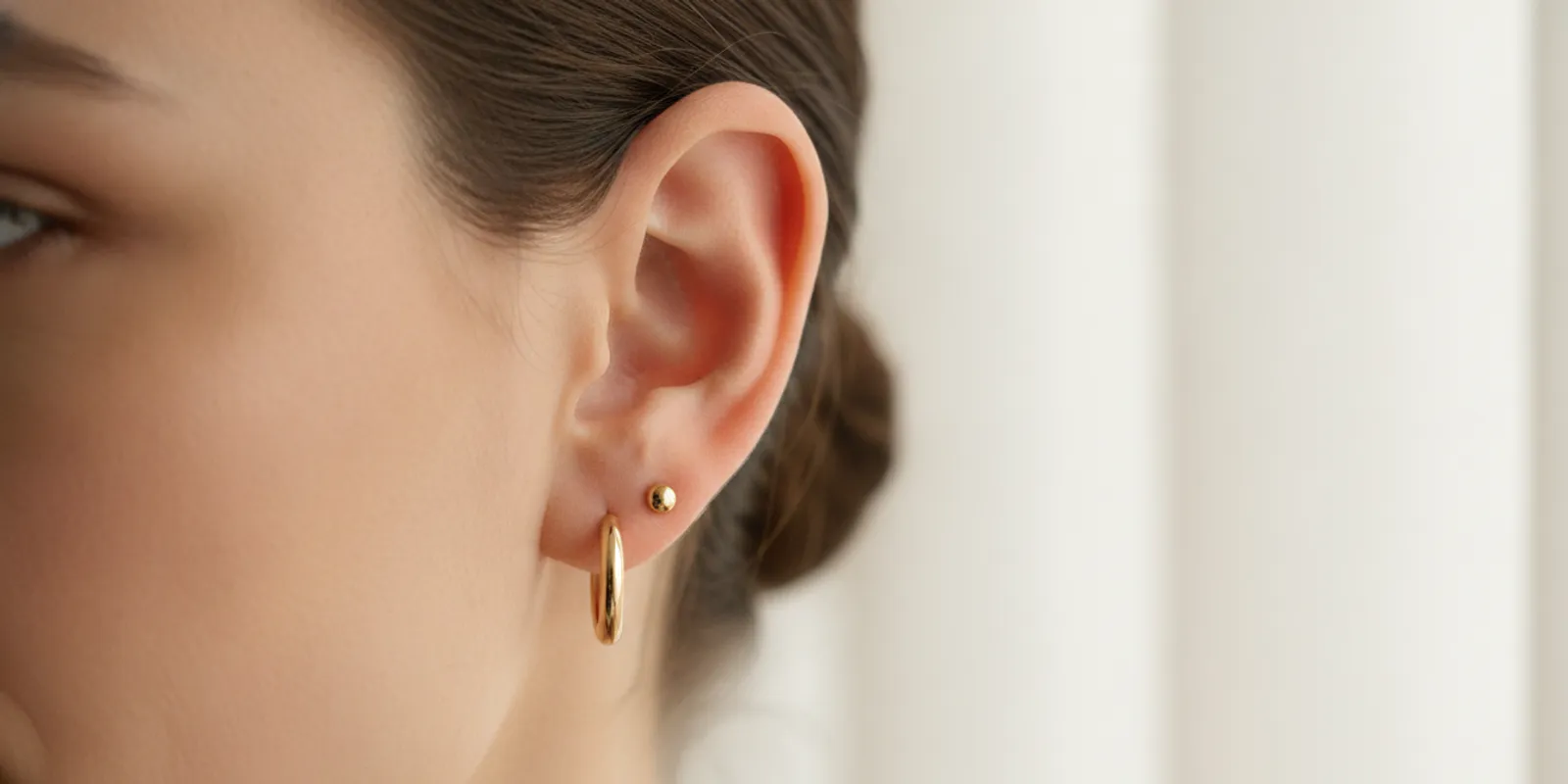
For example, imagine that you already wear a small stud in your lobe and have another healed piercing nearby. You might want to coordinate the metals, add a small contrasting shape, or simply find a piece that makes the existing combination feel more complete. None of those choices requires adding a piercing. If your goal includes a new placement, treat that as a separate part of the planning conversation and confirm which service applies.
The word “curated” also does not mean that there is one correct answer. A stylist can offer suggestions, but your preferences set the direction. A combination that feels balanced to you may not follow the same proportions as a reference photo, and that is fine. Personal style is more useful than a checklist of placements.
What happens during an ear curation appointment?
A styling appointment is a conversation as well as a jewelry-selection experience. You can describe the look you like, point out the piercings you already have, and share practical preferences such as whether you usually wear small or noticeable jewelry. The goal is to understand what you want before narrowing down the options.
A helpful conversation may cover:
- Your starting point:
Which piercings and jewelry you currently have, and which pieces you want to keep wearing.
- Your style:
Whether you prefer a minimal, coordinated, mixed, delicate, or more expressive look.
- Your day-to-day preferences:
How much visual detail you enjoy and whether you want the result to feel easy to wear with your usual wardrobe.
- Your priorities:
Whether you want to refresh existing jewelry, plan a future arrangement, or ask about a new placement separately.
- Package details:
What is included in the visit, what jewelry is part of the package, and whether a piercing is excluded.
From there, the piercer or stylist can help you consider how shapes, scale, and positions relate to one another. You can ask questions, compare options, and decide whether the proposed direction feels like you. You do not have to choose a full ear of jewelry just because you came in for a styling conversation. It is fine to work toward a look in stages.
If you are considering a new piercing, make that clear early in the conversation. The team can explain the appropriate service path and what to confirm before you book. A styling-only package should not be treated as a piercing appointment, and discussion of an idea does not itself mean that a placement has been booked or approved.
It can be useful to think of the visit as a series of small decisions rather than one big reveal. First, explain what you already wear and what you hope to change. Next, identify the pieces or areas you want to keep as the foundation. Then compare possible additions and ask how each one changes the overall impression. You can pause after any step to decide whether the direction still feels right.
Bring your questions even if you do not know the names of the jewelry or placements. You can point to a photo or describe what you notice: “I like that this looks light,” “I want one more noticeable detail,” or “I do not want the ear to look crowded.” Plain-language descriptions can be more helpful than trying to use technical terms you are not sure about.
Before you leave, make sure you understand what you selected and what the package covered. If you are still deciding, ask what information you can review later and whether you need a separate appointment for a piercing. Clear expectations are useful both when you choose a finished styling combination and when you decide to take time before adding anything.
How does anatomy shape an ear curation plan?
Your ear is part of the design. The available space, the contours of your ear, existing piercings, and the way jewelry sits all influence what combinations may be worth considering. A look that works well on one person may not translate directly to someone else. That is why inspiration photos are useful for describing a mood, but they cannot promise the same result on every ear.
When thinking about a plan, consider the overall arrangement rather than focusing on a single popular placement. For example, a small piece near the lobe may create a different visual effect when paired with a larger focal piece higher on the ear. Two pieces with similar scale may read as coordinated, while different shapes can create contrast. These are design choices, not rules you have to follow.
Anatomy-aware styling also means being open to alternatives. If a particular arrangement does not suit your ear or the jewelry does not sit as you expected, you can ask about another combination. If you are asking about a new piercing, placement decisions require a separate conversation with the piercer. No online image or general guide can determine what is appropriate for your individual anatomy.
It can help to bring a few reference photos, but choose examples for the details you like rather than expecting an exact copy. You might like the small scale of one look, the balance of another, or a certain color combination. Pointing out those elements gives the stylist a clearer starting point and leaves room to adapt the plan to your ear.
Existing piercing positions affect how pieces line up. Two holes close together may make a compact pair possible, while more space between them can create room for a different silhouette. A piece that hangs or projects may have a different visual weight from a small stud, even if the two seem similar in a product image. Look at the arrangement from the front and at a slight angle, because jewelry can appear different as your ear turns.
Comfort and practical wear matter alongside appearance. Consider whether your hair, glasses, headphones, or usual routines make certain shapes less convenient for you. These are personal considerations rather than universal restrictions. Mention them when you are comparing options so that styling choices reflect the way you live, not only how a photograph looks.
For proposed new placements, keep the distinction between visual planning and piercing assessment clear. A reference image can show the general effect you like, but a piercer needs to assess the particular ear and discuss whether a proposed placement is appropriate. Do not assume that a placement shown online is suitable for your anatomy, or that it can be performed as part of a curation-only visit.
If an idea does not translate exactly, ask what quality you were responding to. Maybe it was a line of small pieces, the contrast between a smooth stud and a textured shape, or the way one focal element stands apart. Naming the quality can open up alternatives that preserve the feeling you wanted while fitting your existing piercings and the jewelry options being considered.
How can you describe the look you want?
You do not need the right design vocabulary to talk about your style. Describing how you want the ear to feel is enough to begin. Words such as simple, polished, playful, balanced, soft, or bold can help communicate a direction, but examples and preferences are useful too.
Before your visit, ask yourself a few practical questions:
Do you usually wear one or two pieces, or do you enjoy a more layered look?
Would you rather have jewelry that blends together or a clear focal point?
Are there pieces you already own and want to keep in the arrangement?
Do you like similar shapes, or do you want a mix of forms?
Are you planning around one ear, both ears, or a particular existing piercing?
Are you looking only for jewelry styling, or do you also want to ask about a new piercing?
You can also mention what you do not like. For example, you may prefer not to have many small pieces, may want to avoid a crowded look, or may want to keep the arrangement easy to change. A clear “not for me” is useful information, not a problem.
If you have a limited budget, say so before selecting pieces. Ask how the package works, which jewelry is included, and whether there are additional costs for options outside the package. Current offers and inclusions can change, so use the live service information and confirm details before committing.
It may help to sort your preferences into three groups: pieces you want to keep, details you are open to trying, and things you would rather avoid. This simple distinction gives the conversation a clear starting point. For instance, you might want to keep a familiar lobe stud, be open to a different shape in another piercing, and avoid anything that feels large or visually busy.
Consider whether your taste changes by occasion. Some people want jewelry that feels understated for everyday wear and prefer a more decorative look for special events. Others wear the same pieces most of the time and value a consistent arrangement. Tell the stylist which situation matters most, rather than trying to plan for every possible outfit or event at once.
Think about color and finish in the same practical way. You may already own pieces in a particular tone and want new selections to coordinate. Or you may want a deliberate mix. You can also focus on shape, scale, and visual texture instead of deciding that all pieces must match. If you are unsure, compare one change at a time so you can see what makes the biggest difference.
Photos are useful when you annotate them mentally or verbally: say what detail caught your eye. A picture might show a whole arrangement, but you may only like the way two pieces relate or the balance between an open area and a focal point. Explaining that distinction prevents the conversation from becoming a search for an exact copy and makes it easier to adapt the idea.
What is the difference between curation-only and a piercing visit?
This is one of the most important things to clarify before choosing an appointment. Curation-only packages focus on jewelry and styling. They do not include a piercing. A piercing-inclusive service is a different kind of visit and should be booked and priced according to the service details.
Use the following as a starting point, then confirm the current package details with Bella Piercing:
- Choose a curation-only visit
if your goal is to style jewelry for piercings you already have and the package terms match what you want.
- Ask about a piercing appointment
if you want a new piercing. The placement, age requirements, consent rules, jewelry options, and service inclusions depend on the specific piercing and should be discussed directly.
- Ask before booking
if you want both styling and a new piercing. Confirm whether the services require separate booking, whether they can be combined, and what is included. Do not assume a styling package covers a piercing.
When comparing services, read the inclusions carefully. A package described as curation-only is not a piercing package simply because you discuss possible placements. Likewise, a piercing service should not be described as styling-only if the service includes a piercing. Being precise helps you select an appointment that fits your plans and avoids surprises.
You can review the piercing and ear curation package information and the current piercing and ear service price list before reaching out. Since prices, availability, and package terms may change, confirm the details that apply to your intended visit.
A useful way to decide is to write down the outcome you want. “I want to leave with a different combination of jewelry in piercings I already have” points toward a styling conversation. “I want to ask about adding a particular piercing” means you need to ask about that piercing service, its eligibility and requirements. “I would like to style what I have and maybe discuss an addition” calls for an explicit question about whether those needs can be addressed in one visit or require separate appointments.
Do not choose based only on a package name, promotional image, or assumption about what usually happens in a styling visit. Check the current description and ask about anything not stated clearly. Specifically, confirm whether the package is curation-only, which jewelry it includes, whether any selected items could change the amount due, and whether piercing is excluded. That short check is more reliable than inferring the details.
For a new piercing, age and consent requirements are placement-specific. A rule or process for one type of piercing should not be applied to a different placement. Ask about the exact piercing you are considering, who needs to participate in consent, and what information to bring. If you are booking for a minor, confirm the applicable requirements with the studio before choosing a time.
If you are uncertain about the service label, send a concise message describing your goal and the piercings you already have. You do not need to decide on jewelry or a new placement before asking. The useful next step is to identify the appropriate appointment type and verify what it includes.
How do you choose jewelry for a coordinated look?
Jewelry selection is about the way individual pieces work together as well as how each one looks on its own. You might start with a piece you already love and build around it. Or you may start with a color, shape, or level of detail you want to repeat. A stylist can help you compare options, but the final look should feel comfortable to you.
Consider scale and visual balance
Think about how large or visually prominent each piece feels next to the others. A single focal piece can anchor an arrangement, while smaller pieces can add detail without competing for attention. If every piece is equally prominent, the overall look may feel busier than you intended. If everything is very subtle, you may want to add one point of contrast. There is no required balance; the point is to notice how the pieces read together.
One practical exercise is to choose the first piece your eye should notice. That may be a larger shape, a bright detail, or simply the position you want to emphasize. Then consider the other pieces as supporting elements. They can repeat a color or shape, or provide a quieter contrast. This does not mean every arrangement needs one obvious centerpiece; it is simply a way to test whether the pieces compete or work together.
Choose a relationship between shapes
Repeating a shape can make an arrangement feel connected. Mixing shapes can add variety. You might choose one recurring detail and let the other pieces differ, or keep the silhouettes distinct throughout. Looking at the ear as a whole helps you decide whether the combination feels coordinated or intentionally eclectic.
For example, a repeated rounded detail can create a visual thread even if pieces differ in size. Alternatively, a mix of straight and curved forms can add movement. Rather than trying to apply a rule, compare the options at the same time and ask whether the contrast looks intentional to you. If one piece feels out of place, try changing that piece first instead of replacing the entire arrangement.
Decide how much matching matters to you
Some people prefer a closely matched set. Others like combinations that are related without being identical. You can also make one ear more expressive and keep the other simpler. Matching is a preference, not a requirement for a curated look.
Matching can mean several things: the same finish, a repeated motif, similar proportions, or a general mood. You do not need to match every detail. You could keep both ears close in tone while choosing different shapes, or coordinate the overall style while allowing one side to be more prominent. Explain which kind of consistency matters to you so the plan does not become more uniform than you want.
Think about how you want to wear the jewelry
Consider whether you want a set look for daily wear, a more decorative arrangement, or pieces you can change individually. Ask about the jewelry options and package terms available for your visit. The Bella Piercing jewelry guide is a useful place to explore jewelry information before your appointment. If you have questions about a particular piece or combination, confirm the details with the studio.
Also consider how often you actually want to make changes. If you prefer a consistent look, choosing pieces that feel complete together may matter more than having many interchangeable options. If you like changing jewelry, ask which pieces can be considered for the piercings you already have and what you need to know before switching them. Do not assume every piece is appropriate for every piercing or stage; ask about the specific situation.
When comparing jewelry, slow down enough to notice details beyond the initial impression. Does a piece look more prominent because of its shape, its position, or the way it catches light? Does it complement something you already own, or does it make you want to rethink the other pieces? Looking at one possible combination at a time can make these differences easier to judge than looking at a large selection all at once.
What should you do before your appointment?
A little preparation can make the conversation more focused without turning it into homework. You do not need to arrive with a complete plan. A few notes about your preferences and questions are enough.
- Look at your current piercings.
Notice which ones you want to include in the arrangement and whether there are pieces you want to keep wearing.
- Save a few references.
Pick images that show details you like. Use them to communicate scale, shape, or mood, not as a promise of an identical result.
- Decide what kind of visit you want.
Be ready to say whether you are interested in styling existing piercings, asking about a new piercing, or both.
- Review package information.
Check what is included and whether the service is curation-only or includes a piercing. Ask about anything that is unclear.
- Make a short question list.
Include questions about jewelry choices, service inclusions, pricing, and any booking details you need to confirm.
If you are planning a new piercing, do not assume that every placement is available to every person or that requirements are identical. Eligibility, age, consent, and service details can vary by placement. Ask the studio about the specific service you are considering and follow the guidance provided for that service.
Before the appointment, check that you have selected the service that matches your intent. If the online description leaves you unsure, contact Bella Piercing rather than relying on a guess. You can say whether you want jewelry styling only or whether you are asking about a new piercing. When a minor is involved, include that in your question so the studio can explain the relevant process for the intended service.
Bring reference photos in a convenient format and keep the collection small enough to discuss. A handful of examples that show different details can be more useful than dozens of images that all present a complete look without explaining what you like. If you are bringing jewelry you already own, ask in advance whether it is helpful to bring it along and what information the stylist needs to assess it. Do not assume every existing piece can be used in every arrangement.
It can also help to decide what would make the appointment feel worthwhile even if you do not select a full arrangement. You might want a clearer sense of which pieces coordinate, an answer about package inclusions, or a plan for a future visit. Setting that priority can keep the conversation useful without pressuring you to make decisions you are not ready to make.
If timing, budget, or the number of pieces matters to you, say so at the beginning. Ask what is included, whether options outside a package could affect the total, and whether the service can be approached in stages. Confirm current details directly. The goal is to understand the available choices before selecting jewelry, not to assume the online package will cover every possible preference.
How should you compare packages and costs?
Compare the purpose and inclusions of each option rather than looking at a headline price alone. A curation-only package and a piercing service are not interchangeable. Consider what the package covers, what jewelry is included, and whether the appointment matches your goal.
Before you book, check:
- Service type:
Is this a jewelry styling visit, a piercing, or another defined service?
- Jewelry inclusion:
What jewelry is included, and are there choices or upgrades that may change the total?
- Piercing inclusion:
Does the package include a piercing, or is it curation-only? Do not infer an inclusion from the name or photos.
- Eligibility and consent:
What age and consent requirements apply to the particular placement or service?
- Booking details:
Is there a specific appointment type to select, and what information should you provide?
- Current price:
Does the posted price still apply to the option you want, and are any conditions listed?
The price list and package pages can help you understand the options, but confirm current details if anything is unclear. A quick question before booking can prevent choosing a styling visit when you meant to request a piercing, or selecting a piercing service when you wanted only to work with jewelry you already have.
For an apples-to-apples comparison, write down what you are trying to purchase and compare each service against that goal. If you want styling for existing piercings, focus on the jewelry-selection visit and its inclusions. If you want a new piercing, compare the relevant piercing service and confirm the specific placement, jewelry and eligibility details. If you want both, ask whether the services need separate bookings and whether any part can be combined.
Ask whether the listed amount covers the pieces you expect to choose or whether jewelry options outside the package may change the total. Do not assume that a pictured arrangement is included in a package or that every item visible in a photo is part of the service. Confirm what “included” means for the particular offer and which choices are available during your visit.
It is sensible to check the live service page close to the time you book because offers, availability, and conditions may change. If the posted information seems inconsistent with what you were told, pause and ask for clarification before committing. Save or note the answer to any important question, especially when you are comparing a styling-only option with a service that includes a piercing.
A package can be appealing and still be the wrong fit if it does not match your purpose. Likewise, a higher or lower listed amount alone does not tell you whether the appointment includes the jewelry or service you need. Clarity about the visit type and inclusions is the best starting point for a useful comparison.
What if you are not sure which placement or jewelry suits you?
It is normal to have questions before making a decision. You can start with the look you like, explain what you are unsure about, and ask what kind of appointment is appropriate. If your question is mainly about styling existing piercings, ask about curation. If you are considering a new piercing, ask specifically about that placement and the relevant service requirements.
Do not feel that you have to decide on a new piercing just because you are discussing a possible arrangement. A styling conversation can help you explore jewelry without obligating you to add another piercing. If a placement is not suitable for your anatomy or is not something you want after discussing it, you can choose a different approach or wait.
For questions that need a conversation, Bella Piercing has an Ask a Piercer consultation option. Use it to ask what service or discussion is appropriate for your question. It is not a substitute for confirming appointment eligibility, package details, or the specific service you intend to book.
Try separating questions into two categories. Styling questions can include whether two shapes coordinate, how to make an existing arrangement feel less busy, or what type of look might suit your preferences. Piercing questions are about a new placement and require a separate discussion of anatomy, eligibility, consent, and service details. Knowing which kind of answer you need helps you use the appropriate appointment or consultation option.
If you have several ideas, start with the one that matters most. You could ask how to build around a favorite existing piece, then ask whether a future placement might be something to discuss separately. You are allowed to leave some choices open. A gradual plan can give you time to consider how you feel about each change before moving on to another one.
There is no need to present a polished design brief. “I like this general look, but I am not sure what works with the piercings I have” is a clear beginning. Share any constraints that matter, such as wanting a minimal arrangement or preferring not to add a piercing. The discussion should help you understand options, not make you feel obliged to choose one.
How can you keep a curated look manageable?
A curated ear does not have to be a complicated ear. If you want a look that feels easy to maintain, keep the plan aligned with your daily preferences. You may prefer a small number of pieces, a consistent visual theme, or jewelry that you can leave in place rather than changing frequently. Talk through those preferences when selecting pieces.
If you already have healing piercings, ask the studio for guidance that relates to those piercings and their current stage. Do not treat a styling appointment as a substitute for aftercare instructions. Bella Piercing provides information on piercing aftercare; follow the instructions that apply to your service and contact a qualified professional with concerns about healing.
When planning additions, you can also take a gradual approach. First decide which part of the look matters most, then consider whether any additional jewelry or a separate piercing is needed to move toward it. A plan you build over time can still feel cohesive. There is no deadline to complete a particular arrangement.
To make a design easier to live with, think about the amount of attention you want to give it. A modest arrangement may be simpler for someone who prefers not to change jewelry often. A more varied combination may suit someone who enjoys experimenting with different pieces. Neither approach is inherently better; the useful choice is the one that matches your habits and comfort level.
Keep styling expectations distinct from care instructions. Choosing jewelry for an overall look does not answer questions about healing, changing jewelry, or responding to irritation. For those topics, use the instructions related to your piercing and seek appropriate professional guidance when you have a concern. The styling visit is for discussing the arrangement and package, not a substitute for personalized aftercare advice.
Consider whether you want the arrangement to be finished now or to serve as a direction for later. If you are working toward a look over time, keep track of what you already have and which change you want to consider next. That can help each future decision relate to the whole without making you feel that every empty area needs a piece.
Finally, give yourself permission to revise the plan. You may discover that a simple combination feels more like you than the layered inspiration photo that first caught your attention. Or a small change may make existing jewelry feel newly coordinated. The purpose is to make choices that suit you, not to follow a trend or reach a particular count.
Frequently asked questions
Does ear curation always include a new piercing?
No. Curation-only packages focus on jewelry styling and do not include piercings. If you want a new piercing, ask about the appropriate piercing service and confirm whether styling and piercing can be booked together.
Can I get my existing piercings styled without adding another?
Yes, a curation-only visit is intended for styling jewelry rather than adding a piercing. Review the current package terms and confirm that the option matches what you want before booking.
Can I bring photos of a curated ear I like?
Yes. Reference photos can help you describe shapes, scale, or an overall mood. Treat them as inspiration rather than a guarantee that the same arrangement will suit your anatomy or be available as shown.
How do I know which jewelry will work for my ear?
Your existing piercings, ear anatomy, and preferences all matter. Share what you like and ask the stylist to talk through options. For questions about a new placement, discuss that placement with the piercer separately.
Where can I check current pricing?
Review the package details and price list, then confirm current pricing and inclusions before you book. Pay particular attention to whether the option is curation-only or includes a piercing.
A thoughtful ear curation starts with your own preferences, the piercings you have, and a clear understanding of what your chosen appointment includes. Explore the options, ask questions, and choose a visit that fits the look you want to create.


Comments